
Most consultants lose B2B opportunities before they even begin — not because of their expertise, but because of how they make first contact. This article covers the five most common outreach mistakes that damage credibility with corporate decision-makers, and explains the relationship-first approach that actually builds trust and wins long-term consulting clients.
At BoldHaus, we teach one foundational principle above all else: trust comes before the transaction.
That might sound obvious. But if it were, far fewer consultants would be making the mistakes we see every day.
The problem isn’t effort or intent — it’s approach. Most consulting marketing advice is built for high-volume B2C sales or aggressive cold-outreach models. When those same tactics get applied to B2B relationships, they don’t just underperform. They actively damage your credibility.
Corporate leaders have limited time, high stakes, and deeply ingrained filters for detecting a sales pitch. The way you initiate contact either builds trust or erodes it — there’s rarely a neutral outcome. In fact, research from Harvard Business Review found that 81% of B2B buyers feel put off by premature sales pressure — meaning most outreach is actively working against you before you’ve said a word about your services.
Here’s what to avoid, and what actually works.
5 Mistakes That Hurt Your Credibility With B2B Decision-Makers
1. Asking for a Call to “Discuss Their Challenges”
You haven’t yet earned the right to ask a busy executive to share confidential information about their organization. Requesting a call before any relationship exists sends one signal loud and clear: sales pitch incoming.
This approach might work in B2C. In corporate environments, it almost never does.
2. Emailing to Ask “Who’s the Best Person to Contact?”
This feels efficient from your end. From theirs, it signals a lack of preparation — and puts the burden of your sales strategy on someone who has no incentive to help you.
First impressions in B2B are hard to recover from. Don’t waste yours on a question you should have researched yourself.
3. Assuming They Need You Right Now
When you lead with a pitch or a ready-made consulting plan, you’re making several assumptions you can’t possibly verify:
- What initiatives are already underway
- What priorities leadership has already set
- Whether a similar solution is already in progress internally
Even a well-crafted pitch can backfire if the timing is wrong. And once a decision-maker puts up the “no thanks” wall, it’s very hard to tear it back down.
4. Offering a Free Discovery Session
Here’s the hard truth: senior leaders don’t view free discovery sessions as meaningful business engagements.
Worse, if you can genuinely diagnose and address their problem in 30 to 60 minutes, you’ve just communicated that your expertise is shallow. That’s the opposite of what you want to convey. Free discovery sessions belong in a different sales context — not in corporate B2B.
5. Leading With Unsolicited Criticism
Pointing out what an organization is doing “wrong” as an attention-grabbing opener feels clever in theory. In practice, it comes across as condescending.
What looks like a problem from the outside may actually be a deliberate strategic tradeoff, an initiative already in progress, or a temporary shift in priorities. You simply don’t have the full picture — and leading as though you do will cost you the relationship before it begins.
What Actually Works: The “Go First” Approach
If those approaches push decision-makers away, the antidote is simple: bring value before you ask for anything.
At BoldHaus, we call this “going first.” It means creating opportunities for B2B leaders to experience your expertise directly — with no pitch, no pressure, and no strings attached.
This doesn’t mean sending more articles or LinkedIn posts. Executives are already drowning in reading material.
🎥 Prefer to watch instead of read? This article is based on our video: How to Approach B2B Clients Without Being Salesy. Give it a watch and then come back here for the full breakdown.
It means creating real engagement through shared experience. Practically speaking, that looks like:
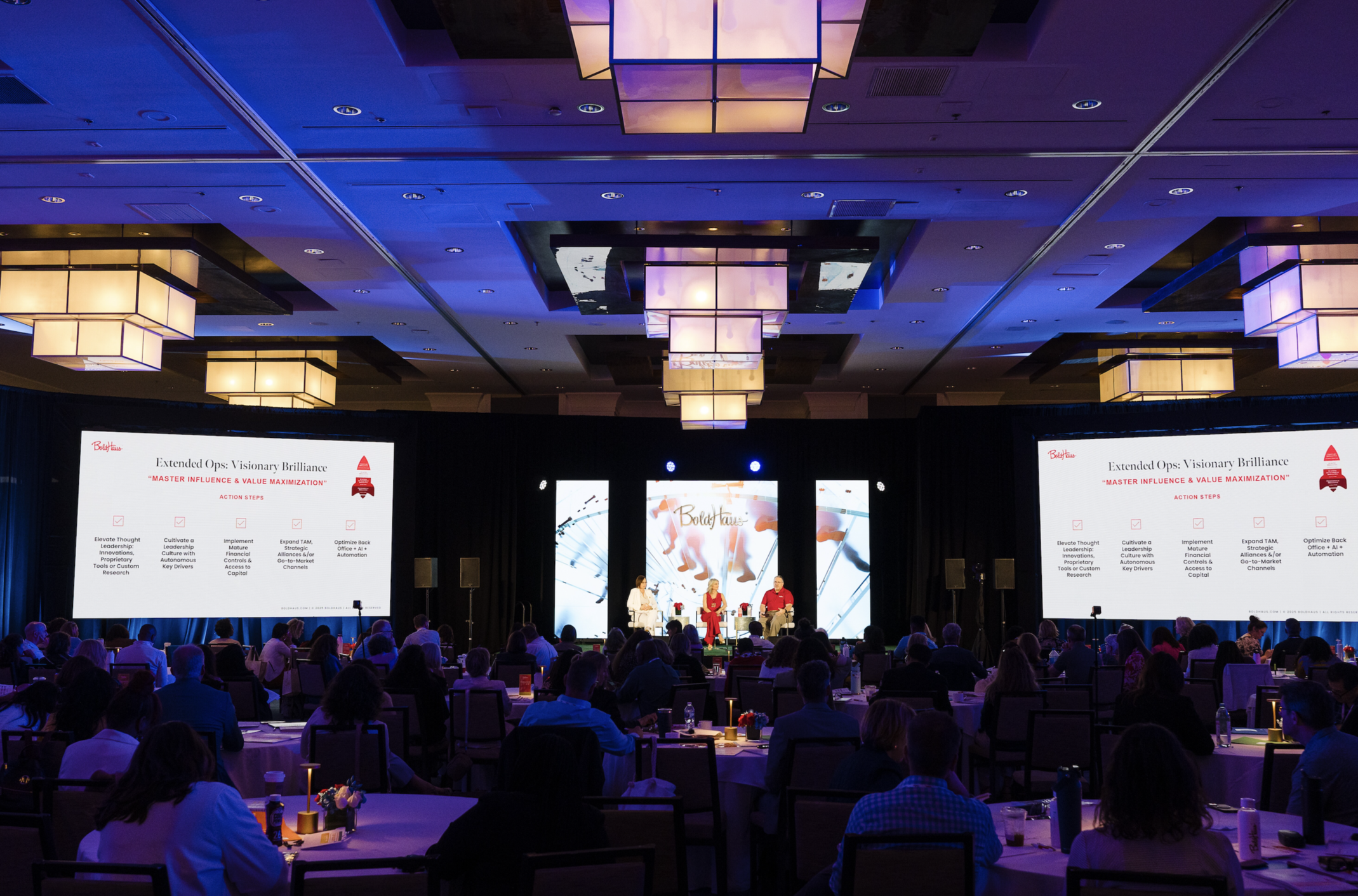
- A conference breakout session you're delivering
- A webinar or masterclass you host
- An industry association presentation
- An executive roundtable you facilitate
- A recorded session that showcases your thinking
Each of these formats lets decision-makers observe how you think, how you solve problems, and how you communicate — on their terms, at their pace, without feeling sold to.
That’s what moves you from “vendor” to “trusted advisor.”
Why This Works (And Why It Compounds Over Time)
When B2B leaders engage with your ideas voluntarily, in a value-driven setting, something different happens:
- Credibility forms naturally, without persuasion
- Trust develops through experience, not promises
- Follow-up conversations feel collaborative, not transactional
Over time, this approach doesn’t just help you win individual clients. It builds a pipeline powered by reputation — which is far more sustainable than constant cold outreach.
Want to Go Deeper? Watch This Next.
This article covers the five mistakes — but there’s a lot more to winning corporate clients than what we can cover here.
Our video How to Approach B2B Clients Without Being Salesy walks through everything above, plus two additional strategies you need if you’re a boutique firm going up against larger competitors.
Ready to Build Relationships That Actually Convert?
If you want to consistently connect with corporate decision-makers and turn those relationships into high-value consulting engagements, BoldHaus can help.
We work with independent consultants and boutique firms who want to:
- Reach the right B2B decision-makers without feeling salesy
- Position themselves as trusted advisors, not just another vendor
- Turn meaningful conversations into long-term partnerships
- Grow revenue and impact without sacrificing their lifestyle
Check out the BoldHaus Collective Here