Many coaches and consultants assume that if they just become more visible online, more clients will follow. But that’s rarely how it works in the real world.
Corporate decision makers aren’t scrolling social media looking for their next consultant — they’re buried in meetings, chasing deadlines, and managing competing priorities. Their inboxes are overflowing. Their calendars are packed.
If you want to reach them, you have to cut through that noise in a way that commands real attention.
At BoldHaus, after more than 20 years helping coaches and consultants land high-end corporate clients, we’ve seen every marketing trend come and go.
But through it all, one principle has never changed: the real breakthroughs happen when you shift from chasing visibility to creating genuine engagement with decision makers.
What separates consultants who get noticed from those who get hired is how they create meaningful exchanges — the kind that earn attention, trust, and momentum inside organizations.
How the Most Successful Consultants Turn Visibility Into Meaningful Engagement
Engagement with the right decision makers is the key to winning high-end consulting clients. And by engagement, we mean having real exchanges where:
- You have their undivided attention.
- You’re adding value in real time.
- They’re asking questions.
- You’re influencing how they think about solving problems inside their organization.
So, how do you get to this point? Here are three strategies we recommend.
Before you go further, you might want to watch this video first so you can see these strategies in action:
3 Strategies To Create High-Value Engagement With Decision Makers
1. Use Other Organizations’ Platforms To Your Advantage.
One of the fastest ways to attract high-end consulting clients is to use other organizations’ platforms to your advantage. Remember that most — if not all — high-end decision-makers have an already established knowledge base of what is happening within their industry. These include:
- Industry associations
- Professional organizations
- Technology councils
- Trade groups
- Membership-based networks
These organizations have spent years — sometimes decades — building credibility and audiences. Instead of trying to build your own audience from scratch, which many self-starters do through TikTok or Instagram, you can step into platforms that already have the right people who are looking for and are more receptive to the specific type of services or products you provide.
These platforms often include:
- Podcasts
- Webinars and masterclasses
- Industry blogs and publications
- Executive roundtables
- Panels and conferences (local, national, international)
They are constantly looking for experts who can deliver real value.
Is Joining An Industry Association ‘Worth It’?
You might balk at the thought of spending thousands of dollars either joining an industry association or paying for a professional conference.
And yet, you may also think it’s “reasonable” to spend months or even years building your audience from the ground up.
Do you see where there may be an issue?
Sometimes, the easiest way to get clients is to spend money first. A Forbes article clarifies that joining an industry association can be extremely helpful if you use it correctly — that is, you use it to engage with the right people and understand why you are there.
Simply joining an association just for the name is useless if you don’t leverage it to empower your business goals.
A Practical Tip:
One of the fastest entry points is podcasts. They require no travel, have built-in audiences, and decision makers actively listen to them.
They’re also “cheap” in that you rarely need to spend to be invited to one.
A great place to find industry-specific podcasts is Feedspot, which curates ranked lists of professional and B2B-focused shows by niche.
Keep in mind that while small business podcasts can be helpful for practice, they rarely put you in front of the decision makers you want. Try to join an already established podcast series.
2. Create Your Own Engagement Platform
While leveraging other organizations’ platforms is powerful, owning your own engagement platform gives you leverage that visibility alone never will. That’s why in our Land | Expand | Scale Vault, open exclusively to our BoldHaus Collective members, we dedicate an entire module to the ins and outs of this strategy.
Your platform might be:
- A recurring webinar or masterclass
- An executive roundtable
- A private virtual briefing
One of the reasons this strategy works so well is because high-quality, long-form content is what serious decision makers seek out in today’s market.
Creating your own engagement platform also gives you full control over:
- The topics
- The timing
- The audience level
- The audience engagement
- The conversation
- The calls to action
By controlling all these aspects, you also gain something incredibly valuable: insight.
Every question, concern, and discussion becomes real market intelligence, helping you sharpen your thought leadership, shape future offers, and lead more relevant, higher-quality conversations with decision makers.
Lastly, when done correctly, your platform can eventually become a relationship asset. You can invite leaders from associations or partner organizations to present, creating a powerful exchange of influence that strengthens long-term B2B relationships.
3. Have One-On-One Engagement With Decision Makers
One-to-one engagement will always outperform one-to-many strategies when it comes to closing high-end consulting work.
Yes, it’s slower.
But that’s because it works.
Having one-on-one engagement with high-end decision makers is absolutely crucial for them to get to know you, your business, and most importantly, why working with you makes sense.
How Does Engagement Improve Your Chances Of Winning High-End Clients?
According to McKinsey research, executives spend around 40% of their time making decisions — and worse, many of them believe that time is poorly used.
The only way to truly understand what decisions are on their plate, how they go about making those decisions, and how you can best influence those decisions, there’s simply no substitute for one-on-one conversations.
And you have to be very strategic with how you engage with a prospect. Two things you should never do are:
- Waiting for decision makers to reach out.
- Treating one-to-one conversations like sales pitches.
Instead, you need to engineer reasons for decision makers to want to spend time with you.
At BoldHaus, we call these bridge strategies because they bridge the gap between visibility and real business conversations. And this is the most important part of any business development strategy. (There is also an entire module in our BoldHaus Collective Land | Expand |Scale Vault on this strategy as well.)
It doesn’t matter how visible you are, how many industry events you attend, or even if you have the most successful podcast in the world, if you are unable to have these one-to-one engagement meetings with your clients.
Examples of effective bridge strategies:
Insight interviews
Conduct 30- to 40-minute one-to-one interviews with decision makers to create a pulse report or industry briefing. During these conversations, ask them about their challenges, priorities, and perspectives. In return, you provide them with a private briefing on what you learned from other leaders in the industry.
Decision makers are curious about what others in the marketplace are doing, so this gives them valuable insight while positioning you as someone who truly understands the landscape.Conduct Assessments
This could be organizational maturity models, departmental assessments, or people-focused evaluations if you’re in the coaching or people space. The goal is to give them a clear baseline of where they are, along with ideas for improvement. These sessions create immediate value and open a conversation about next steps.Business intelligence briefings
After attending a conference, gathering market data, or speaking with clients, synthesize your insights and share them with decision makers. Discuss trends, emerging best practices, or cautionary lessons.
These conversations often lead naturally to: “I think we could actually use your help with this.” And that’s exactly where high-end consulting work begins.
What’s One Strategy You Should Avoid at All Costs?
If you want to be taken seriously by corporate decision makers, never offer free discovery sessions.
It sounds very tempting, especially when you’ve been working in B2C environments. But when it comes to serious-minded decision makers, it undermines your credibility.
More importantly, free discovery sessions are simply the wrong first step in laying the foundation for a yearslong strategic relationship.
Instead, focus on value-based engagement that respects both your expertise and the decision maker’s time.
What’s the Next Step If You Want to Go Deeper?
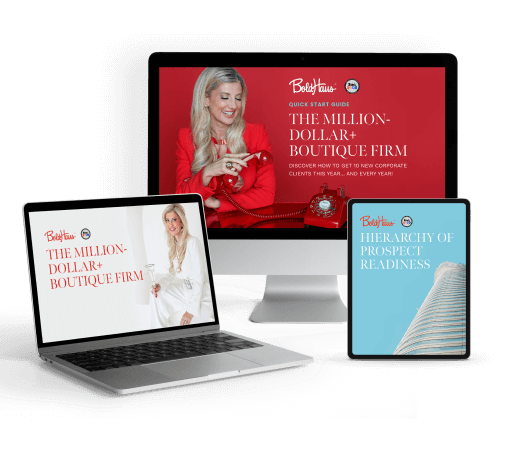
If you’re serious about building consistent, high-quality opportunities with B2B clients, we’ve put together a guide that walks you through:
- How to expand your network of real decision makers.
- How to build enterprise-level influence without feeling salesy.
- The nine critical differences between B2C and B2B markets.
- How to lead high-level conversations that turn into long-term engagements.
Download the guide here: wincorporateclients.com