
Is there anything worse than sending a proposal to a (seemingly) excited client only to hear…nothing after? Days can pass, and you sit there staring at your email inbox hour after hour just waiting. For anything. Even a “hello.”
And yet, knowing what to say in a follow-up email can feel surprisingly tricky, especially when you want to stay professional and respectful of their time, without sounding overly aggressive.
That said, it’s worth mentioning that the best follow-up is the one you never have to send in the first place. We’ve written 2 articles that improve your chances of having your business consulting proposal reviewed, understood, and immediately implemented:
- Use our proven 11-part proposal template.
- Learn how to effectively present your proposal to a client — not email it over and lose all control.
But if you’re here now, you likely need to follow up, and you want to do it in a way that feels confident and intentional.
In this article, we’ll walk you through the process we teach our clients, plus 2 ways to prevent this situation from happening at all.
You may also want to watch this video first, so you hear a more extensive discussion on writing a follow-up email that actually gets replied to:
What Should You Not Write in a Follow-Up Email?
As tempting as it may be, here are 5 things you’ll want to avoid after sending a proposal.
- Avoid phrases like “Just checking in” or “Just following up.”
These phrases immediately position you as reactive instead of confident. It also sounds exceedingly templated (how many emails have you read that begin like this?), and not tailored to what the client actually wants or needs. These phrases almost never receive a response.
- Avoid trying to be cute, clever, or funny.
Even if it feels lighthearted, humor can undercut your authority (and expertise) at this sensitive stage of the decision-making process. High-level executives want to be assured that this partnership is being taken seriously — and even an innocent offhand comment can land poorly.
- Avoid asking if they have questions.
If questions came up naturally, they would have likely already reached out. This phrasing tends to stall momentum rather than move it forward. Plus, this is a dead-end question that can lead to “No, we don’t have any questions.” Then what? You’re right back where you started.
- Avoid re-selling or over-explaining the product.
Your co-creation conversation and proposal already did that work (especially if you followed our proven 11-part proposal template). Trying to convince them again can come across as anxious or pushy.
- Avoid creating artificial urgency.
Statements about limited availability, expiring prices, or bonuses often feel transparent and “cheap.” This can erode trust instead of building it.
If you notice, all five approaches listed above create a feeling of anxiousness and insecurity. Whether through humor or artificial pressure, any of these phrases immediately makes you sound as if you need the project, absent any consideration of what the client needs.
Instead, what you want to do is add value to the co-creation process while leveraging the powerful psychological influencer of curiosity to get them back into conversation.
Below is the simple, proven template we share with our BoldHaus Collective members.
Feel free to copy and paste this and tweak it as needed.
The “Non-Follow-Up” Follow-Up Email Template
Subject: Additional Ideas & Next Steps
Hi [Prospect’s First Name],
We’ve been giving more thought to your project/initiative and have a few additional ideas that could further support your goals, along with a couple of clarifying questions that have popped up.
Let’s connect for a quick 20-minute Zoom session to discuss. I’m available [Option 1] or [Option 2] – let me know which works best for you.
Looking forward to it!
Best,
[Your Name]
Why Does Our Non-Follow-Up Follow-Up Email Look Like This?
Instead of “checking in” or “waiting for a response,” you’re re-entering the conversation with a purpose, letting the client know you’ve continued thinking about their goals and have something meaningful to discuss.
It also naturally guides the next step forward by inviting the client into a short, focused conversation. A few details here matter:
- You’re inviting them to a brief meeting (20 minutes at most). This indicates that you’re respectful of their time and you already have a talking point, or several.
- You’re offering only 2 specific time options. Not 5, Not 3. Not a long scheduling link. Just 2 clear choices.
You’re not asking if they want to meet — you’re making it easy for them to say when. This is a simple but powerful method for getting them reengaged.
And the beautiful part?
When you offer two options, clients are far more likely to reply. Even if neither time works, they’ll often come back with an alternative, because you’ve already framed the conversation as moving forward.
Why Should You Never Ask “When Are You Free?” or “What Works For You?”
Decision makers are busy. Very busy. And are asked to make decisions all day, every day.
Asking open-ended questions, such as “When are you free?” adds even more cognitive stress to their already stressful day.
An article by ClickUp on “meeting recovery syndrome” even stated that poorly planned, overly long, or back-to-back meetings release significant amounts of cortisol and stress hormones.
So instead of asking your prospect to look at their overflowing calendar to figure out a good time to connect, narrow it down for them to just two options.
What New Ideas Do I Need to Present?
Okay — you might have paused when reading, “We have a few additional ideas,” from the template, and thought, “What new ideas?”
This doesn’t need to be complicated.
At this stage, you’re simply identifying 1 or 2 thoughtful points that help move the project forward. These could include:
- A few extra details about your program or services that aren’t “new” but they would be “new to them.”
- A cool idea you did happen to think of when you were daydreaming about getting started with this new client.
- Other questions that you didn’t ask during your initial co-creation meeting, but would help get the client even more excited to move forward.
Often, these additional ideas are already there. You just haven’t discussed them with the client as of yet.
And remember: This follow-up is your opportunity to re-engage around the work itself — not to sell, but to collaborate and create excitement to get going. And by reengaging you’re also creating an opportunity to find out where your client is in their decision-making process and if any internal roadblocks or objections have emerged, whether that’s a competing priority or project, a budget realignment, a stakeholder that’s not fully onboard, a bandwidth problem, or something else entirely.
Why Do Clients Go Silent After You Send A Proposal?
When a client goes quiet after receiving a proposal, it’s rarely a hard “no.” Most of the time, it’s “We still want to do this, but X, Y, or Z happened.”
Decision makers are usually balancing several things at once, including:
- Internal approvals
- Budget trade-offs
- Other stakeholders entering the conversation
- Urgent “fire drills” that push your proposal down the list
Because of this, proposals are often delayed, rather than rejected. They sit in an inbox waiting for the right moment — one that may not arrive on its own.
This is why you need to create both alignment and urgency (not artificial ones, but real urgency based on the client’s actual operational goals). You want decision makers to feel that moving forward is clear, manageable, and worthwhile. When collaborating with you feels like the easiest next step toward their goals, it becomes far more likely that your proposal stays top of mind.
How Can You Prevent Clients From Ghosting You In The First Place?
The most effective way to avoid a stalled proposal is to create alignment before the proposal ever goes out.
When a client is both clear and invested in the solution being proposed, there’s far less room for hesitation later.
There are 2 practices that consistently help keep momentum moving.
1. Co-Create The Solution With The Client
True co-creation means working through the details together before anything is finalized. This typically includes:
- Spending 45–60 minutes walking through the proposed solution.
- Discussing scope, timing, delivery format, and investment ranges.
- Clarifying who will be involved and how decisions will be made.
If the proposal clearly reflects what you’ve already agreed on collaboratively, there’s far less things the client has to figure out on their own.
2. Present The Proposal To The Client
When you send a proposal without walking a client through it:
- You lose control of the narrative
- Questions pile up silently
- Misinterpretations go unaddressed
Presenting the proposal live — whether over Zoom or in person — turns it into a working conversation, not a static document. It allows you to address concerns in real time and adjust details collaboratively.
When proposals are co-created and walked through live, ghosting becomes far less likely.
How Do You Create Even More Prospects In Your Pipeline?
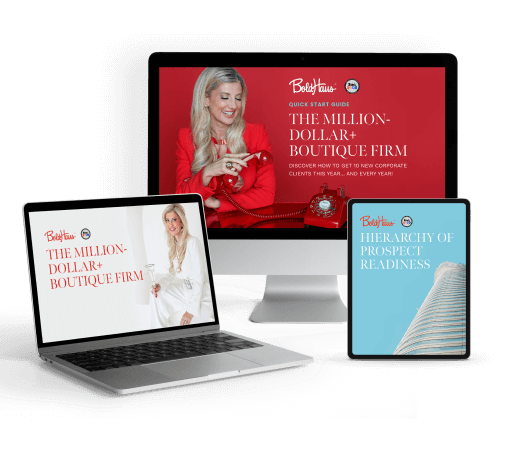
If you want to go deeper and build a more predictable path to corporate work, we’ve created a guide designed specifically for selling into organizations.
Inside the guide, you’ll learn how to:
- Expand your network of real decision makers.
- Build enterprise-level influence without feeling salesy.
- Navigate the nine critical differences between B2C and B2B markets.
- Master high-level conversations that lead to long-term corporate engagements.
Download the guide here: wincorporateclients.com