
TL;DR: Gateway offerings are strategic ways to price and package your business consulting services when selling to large corporations. They let consultants, leadership coaches, and other experts get a true “foot in the door” while delivering real value and building momentum. Gateway offerings work because they reduce risk for corporate buyers and make it easier to say yes to an initial engagement — but you must avoid underpricing them, because that first engagement becomes a powerful price anchor that shapes how decision-makers perceive your value and fees over the long term.
We teach our BoldHaus Collective members the “land and expand” approach, which involves landing a corporate client through a well-designed initial engagement, then expanding into larger and repeat opportunities with that same organization.
One of the best ways to put “land and expand” into motion is through a gateway offering. Instead of trying to sell a massive, complex engagement on day one, you start with a focused, lower-risk project that gives the client real value and gives you a clear path into deeper work.
If you prefer to watch this strategy broken down, check out this video:
How to Sell to Big Corporations.
Why Gateway Offerings Drive Consulting Success
A gateway offering is an intentionally designed first engagement that opens the door to deeper consulting work with a corporate client. It usually comes at a lower dollar amount than your full programs, which keeps the approval threshold lower and makes it easier for decision-makers to access available budget.
A strong gateway offering is also scoped to have fewer interdependencies — it doesn’t require multiple departments to sign off and coordinate before anything can move. That makes it less complicated, faster to start, and lower risk for the buyer, while still giving them a meaningful way to “test drive” your expertise.
A true gateway offering should do these 5 things:
Deliver meaningful, standalone value (not just a teaser)
Reduce perceived risk for the client
Give you deeper insight into the organization’s reality
Naturally create opportunities for future consulting services
Build relationships with actual decision-makers
This is crucial when you’re looking to stand out and get corporate clients, especially if you’re selling training, coaching, or advisory work.
Whenever a company buys expertise, they’re buying something they cannot fully see in advance, which means the perceived risk is high — even when you have strong case studies and metrics.
Gateway offerings lower those stakes. Decision-makers who have had disappointing vendor experiences in the past get a low-stakes way to see how you think, how you work, and what it’s like to partner with you — before they commit to a broader engagement.
Psychology research backs this up. Classic “foot-in-the-door” studies by Freedman and Fraser showed that when people say yes to a small initial request, they are significantly more likely to agree to a larger request later. In other words, small commitments increase the likelihood of future commitments — which is exactly how gateway offerings support a land-and-expand strategy in corporate consulting.
4 Elements of Effective Gateway Offerings
1. They Deliver Real Value
A strong gateway offering delivers tangible value, even if it’s a relatively small project.
The client should be able to point to a clear outcome, insight, or decision they gained.
- Even at investment levels like 4–5k, corporate buyers still view this as meaningful budget, so the ROI must be visible to them.
If the project feels insignificant or the impact is hard to see, it becomes much harder to justify a next engagement — no matter how good the work actually was.
2. They Lead Naturally Into the Next Step
You never want a gateway offer to be a one-off that goes nowhere. It should be designed to reveal the logical next steps.
Effective gateway offerings:
Give you “insider intel” you could never get just from the outside
Surface needs, gaps, and opportunities that are bigger than the scope of the first project
- Set up clear, natural follow-on work (implementation, rollout, coaching, advisory, etc.)
The point isn’t just to complete a small engagement; it’s to create a bridge to larger, longer-term work that genuinely serves the client and grows your revenue.
3. They Give You Time With Real Decision Makers
Your gateway offering should intentionally put you in direct contact with decision-makers, not only mid-level champions.
Use this time to:
Build rapport and trust with key leaders
Hear how they describe their priorities, constraints, and success metrics in their own words
- Understand internal dynamics that will affect future projects
This access makes it much easier to position and win higher-value engagements later because you’re no longer guessing what matters most inside the organization.
4. They Bake in the “Bounce”
Every gateway offering needs what we at BoldHaus call “the bounce”: a scheduled follow-up meeting to review results and discuss what comes next.
That means you:
Do not end with “here’s the report, attached — thanks!” and leave it there
Do build in a debrief and decision conversation as part of the scope from the beginning
If your gateway offering ends with you sending deliverables and hoping they get back to you, you’ve stripped the “expand” right out of your land-and-expand strategy. The bounce keeps momentum and makes the transition to the next engagement feel natural instead of pushy.
5 Examples of Effective Gateway Offering for Business Consultants
There’s no single “right” gateway offering; the key is aligning your expertise with what corporate buyers are already trying to solve. Here are several formats that work well across consulting and expert services:
1. Discovery Phase
A discovery engagement helps the organization clarify a problem or opportunity while giving you a structured look inside the business.
It can include:
- Stakeholder interviews
- Focus groups
- Organizational assessments
- Internal diagnostics and surveys
The outcome is sharper clarity for the client — and a detailed understanding for you of where the bigger, higher-value opportunities lie.
2. Gap Analyses
Gap analysis projects help organizations understand the distance between where they are and where they want to be.
You might compare:
- Current systems vs. desired outcomes
- Existing leadership capabilities vs. future growth goals
- Operational reality vs. strategic objectives
These projects naturally lead into implementation consulting, change roadmaps, and ongoing advisory support, because once the gaps are defined, someone needs to help close them.
3. Strategy Days
Strategy days (or half-days) bring key leaders together with you to focus on a specific problem, initiative, or decision.
They work well because they:
Create direct, concentrated access to decision-makers
Deliver immediate clarity and prioritization
Surface additional consulting needs in real time
- Build trust quickly by showing how you think, facilitate, and add value
4. Pilot Programs
Pilot programs are especially effective if you offer:
Leadership coaching
Employee or manager training
Change management consulting
- Team development or culture work
A successful pilot creates an internal case study that makes it easier for stakeholders to justify rolling out your work across more teams, business units, or locations.
5. Strategic Roadmaps
Roadmap engagements are powerful gateways because they define the “what and when,” which naturally leads into the “how and who.”
A roadmap can help a client define:
Priorities and focus
Milestones and success measures
Phased implementation plans
Strategic direction over the next 6–24 months
From there, it’s a logical step into longer-term advisory or execution support — often at significantly higher fees than the initial roadmap.
The Number One Pricing Mistake Consultants Make With Gateways
As useful as gateway offerings are, there’s one pricing mistake that can quietly cost you tens — or even hundreds — of thousands of dollars over the life of a corporate account: pricing the gateway too low.
It’s understandable. You want to:
Reduce friction on that first “yes”
Make the engagement feel like an easy decision
Win the client and prove your value
But here’s the problem: your first engagement becomes a powerful price anchor in your client’s mind. Behavioral research on pricing and persuasion shows that initial numbers create reference points that shape how all subsequent prices are perceived.
In practice, if your gateway offer is significantly underpriced:
Larger proposals suddenly feel “expensive,” even when they’re fair and strategic
Clients may struggle to understand why your later work commands higher fees
Your perceived value can become artificially capped at “entry-level”
So, while the gateway engagement should feel accessible, it still needs to be priced in a way that reflects your expertise, the stakes of the problem, and the strategic nature of the work. A “cheap” first engagement can feel like a win in the moment, but you end up paying for it every time that client buys from you again.
If shortening long corporate sales cycles is one of your reasons for using gateway offerings, you may also find this article helpful.
Ready to Build Stronger Consulting Relationships?
If strategies like gateway offerings, land-and-expand, and smarter pricing are resonating with you, the next step isn’t just collecting more tactics — it’s putting yourself in an environment where you can refine and implement them with support.
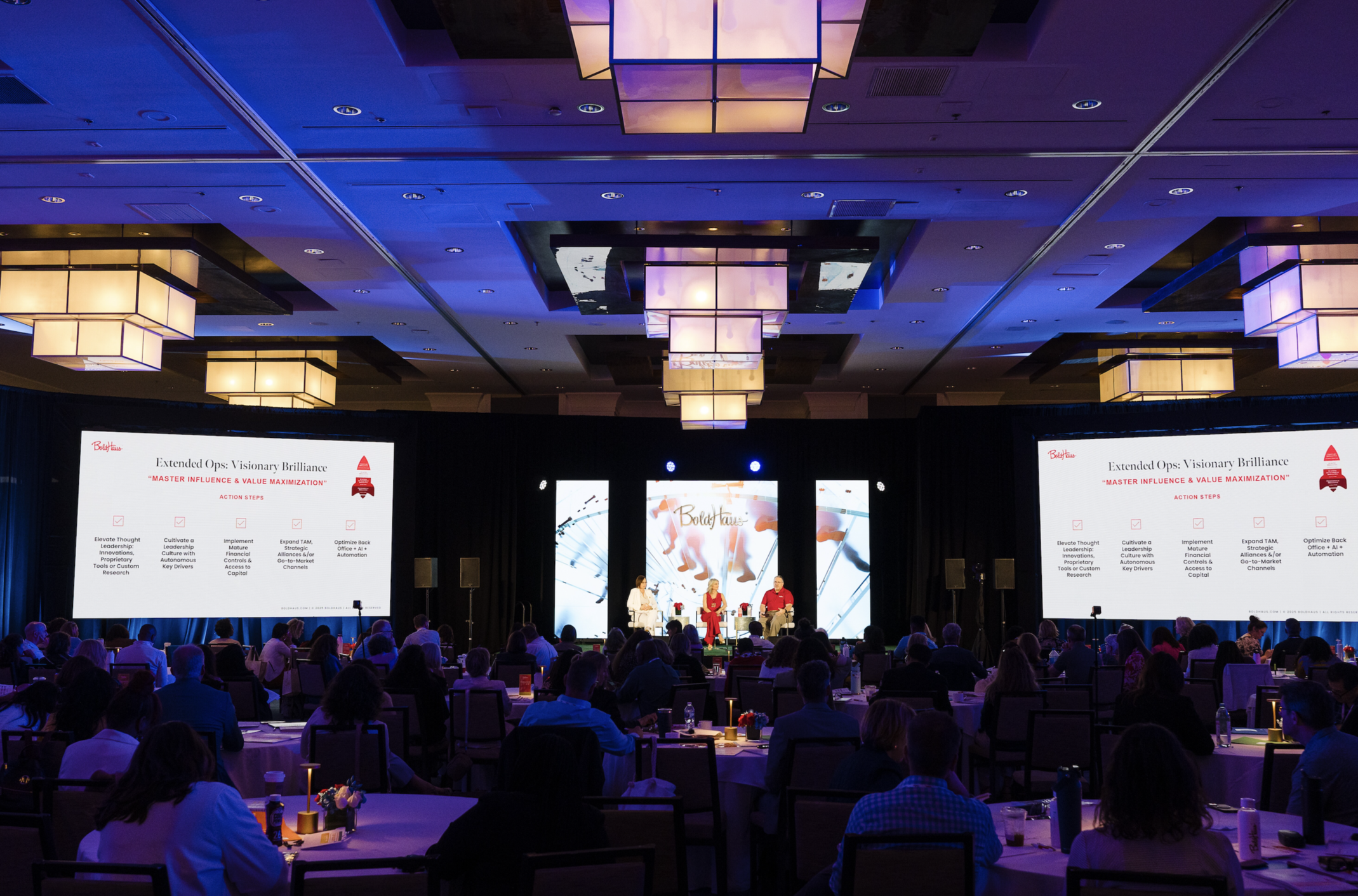
That’s exactly what happens at the INSIDE EDGE Growth Summit by BoldHaus.
At INSIDE EDGE, you’ll go deeper into how to:
Position your consulting services around what decision-makers are already ready to buy
Lead stronger sales conversations that avoid “endless maybes” and move to a clear yes or no
Increase your consulting fees in a way that feels aligned and sustainable
Build more predictable growth systems so you are not the bottleneck in your business
Stay competitive and relevant in an AI-driven business landscape
- Expand client relationships into larger, longer-term corporate engagements
If you’re ready to work more strategically with big companies — and keep your pricing aligned with your value — you can learn more and get your tickets at:
https://boldhaus.com/insideedge/